Genie scissor lifts have a useful habit most brands lack: the model number tells you what the machine is. A GS-1930 is a slab scissor with a 19 foot platform height and a 30 inch wide chassis, and a GS-2669 RT is a 26 foot rough terrain machine 69 inches wide. That decoding is the first step in every Genie parts request, and this guide covers the rest: how Genie identifies machines by serial number, which components need replacing most often, and how to get parts fast in Indiana and Illinois. AirWorx rents, sells, and services Genie equipment from branches in Indianapolis, Fort Wayne, and Warsaw, Indiana, and Flora, Illinois.
To order the right Genie part: read the full model and serial number from the serial plate on the chassis, send both with a plain description of the symptom and photos, and let the serial number, not the model year, determine the exact revision that fits.
Which Genie machines does this guide cover?
Slab electric scissors. The GS models most common on job sites and in facility fleets: GS-1330m, GS-1930, GS-1932, GS-2032, GS-2632, GS-2646, and GS-3246. Reading the number: the first two digits are platform height in feet, the second two are chassis width in inches. These are 24V battery-electric machines built for finished floors, with non-marking tires and pothole protection systems.
| Model | Platform height | Chassis width | Class |
|---|---|---|---|
| GS-1930 | 19 ft | 30 in | Slab electric |
| GS-2632 | 26 ft | 32 in | Slab electric |
| GS-3246 | 32 ft | 46 in | Slab electric |
| GS-2669 RT | 26 ft | 69 in | Rough terrain |
| GS-4069 RT | 40 ft | 69 in | Rough terrain |
Rough terrain scissors. The wider GS-2669, GS-3369, and GS-4069 class, in RT engine-powered versions along with DC and BE (bi-energy) variants on some models. These add four wheel drive components, outrigger and leveling hardware, and engine systems the slab machines do not have.
Genie also builds S-series telescopic booms, Z-series articulating booms, and GTH telehandlers. This guide focuses on scissors, but the identification method below is the same across the Genie line, and the AirWorx parts team handles all of it.
How do you identify the right Genie part?
Start at the serial plate, then use the serial number for everything. Genie serial numbers carry a model-based prefix, and the machine’s production position within that serial range determines which components fit. Genie does not encode the year of manufacture in the serial number, so the serial range, not the model year, is what a parts specialist works from. If the plate is damaged or missing, look for the serial number stamped into the chassis frame.
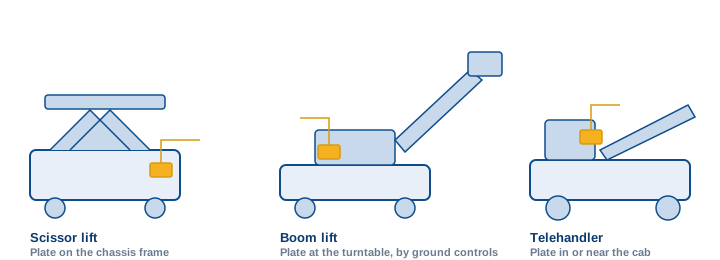
Genie supports this with its Smart Parts serial number lookup system, which maps a serial number to the exact parts documentation for that machine. That is also why a complete serial number usually turns a Genie parts request into a same-day answer: the number goes in, the correct revision comes out, and nobody is guessing between two versions of a control box.
As with any brand, photos close the remaining gap: the component, its connectors and mounting, any printed part number, and for hoses both end fittings and the routing.
Common Genie scissor lift parts by system
Controls and electronics. Platform control boxes and joystick controllers, ground control stations, membrane panels and decal overlays, limit switches, and the down/up toggle and enable switches that take daily abuse. A dead function is not automatically a dead controller: battery state, the platform cable, connectors, and interlocks cause a large share of “controller” symptoms, and Genie machines report fault codes that narrow the search before any part is ordered.
Batteries and charging. The slab GS machines live and die by their 24V battery sets and on-board chargers. Chargers are voltage and chemistry specific, and battery habits, watering, clean terminals, full charge cycles, decide whether a set reaches its rated life. If a machine loses runtime, load-test the batteries before replacing a charger, and confirm the charger’s output matches the battery chemistry before replacing batteries.
Hydraulics. Lift cylinders and seal kits, pumps and motor assemblies, manifold valves and coils, hoses, and fittings. Slow lift or drift usually starts a seal kit and valve conversation, not a pump replacement.
Scissor stack and deck. Scissor arm pins and bushings, slide blocks, deck extension rollers and latches, entry gates and rail hardware, and pothole guard mechanisms. These wear items are what annual inspections flag most often on high-hour scissors.
Drive and chassis. Wheel drive motors, hubs, brakes, steer components, and tires. Slab machines take solid non-marking tires; RT models run lugged pneumatic or foam-filled options. Tire spec follows the model and serial, not just the size stamped on the old tire.
Engine parts for RT models. Filters, belts, fuel system components, and sensors for the engine-powered rough terrain machines, plus the outrigger cylinders and pads unique to that class.
Should you use OEM or aftermarket Genie parts?
Genie’s serial-range documentation makes OEM the clean choice for electronics, cylinders, structural hardware, and anything safety related: the Smart Parts trail keeps every future repair aligned with what is actually on the machine. Aftermarket can be sensible for batteries, filters, tires, and commodity hardware where specifications are published and fit is not revision-dependent. The AirWorx parts counter will say plainly which side of that line a given component falls on.
Local Genie parts support in Indiana and Illinois
AirWorx carries Genie across its rental fleet and sales inventory, which means the parts counter sits next to technicians who work on these exact machines every week. Branches in Indianapolis, Fort Wayne, and Warsaw cover Indiana, and the Flora branch covers southern Illinois, with parts transfer between branches and a service fleet that runs around the clock for on-site work. If a Genie scissor is down during committed work, rental coverage from the same fleet bridges the repair.
- Full model designation from the serial plate
- Complete serial number (from the plate or the frame stamp)
- Part number from the failed component, if a label or casting shows one
- Photos: the component, its connections, and its position on the machine
- The symptom in plain words: what the machine does and does not do
How to order Genie parts from AirWorx
Send the model, the full serial number, the part number if you have one, a plain description of the symptom, and photos. Describe what the machine does, not just the part you suspect: “platform raises but will not drive at height” points somewhere specific, and it protects you from buying a part that was never the problem. When the part is confirmed, ask what belongs in the same order, seals, hardware, or the wear item behind the failure, and keep the confirmed part number with the machine’s record.
Frequently asked questions about Genie scissor lift parts
What do Genie GS model numbers mean?
The first two digits are platform height in feet and the next two are chassis width in inches. A GS-2632 has a 26 foot platform height on a 32 inch wide chassis.
Where is the serial number on a Genie scissor lift?
On the serial plate on the chassis, and stamped into the frame if the plate is missing or unreadable.
Does the Genie serial number tell you the year?
No. Genie serial numbers identify the model and production position, and year is determined from serial ranges in Genie’s documentation. Parts fit follows the serial range, so the serial number matters more than the year.
Are parts interchangeable between a GS-1930 and a GS-1932?
Not automatically. Related models share many components, but revisions differ by model and serial range, so compatibility should be confirmed by serial number before ordering.
Should I choose OEM or aftermarket Genie parts?
OEM for electronics, hydraulics, structural, and safety components; aftermarket can be reasonable for batteries, filters, tires, and hardware. Confirm against your serial number either way.
Can AirWorx help if the machine is down and the part is unclear?
Yes. Send the serial number, symptom, and photos, and if it is still not conclusive, AirWorx service can diagnose the machine at a branch or on site and order from a confirmed diagnosis.
Need a Genie part identified? Send the model, serial number, component details, and photos to the AirWorx parts team.
Read the Aerial Lift Parts guide · Back to Equipment Resources